New Dogs Learning Old Tricks
While the rising young blood in the marketing industry are quite often positive they invented the industry, many of the same tricks and tactics business have used for centuries are still in use. There are basics every business should learn and can survive on no problem … even without posting social media images of your staff doing silly things in the office.
Marketing strategies used before the rise of the internet continue to shape how businesses communicate with audiences in 2026. Forty years ago, promotional efforts relied on physical media, face-to-face engagement, and broadcast channels. While digital platforms now dominate many aspects of marketing, several pre-internet methods remain active and relevant. These approaches persist not as relics but as enduring tools that still deliver results in specific contexts and industries.
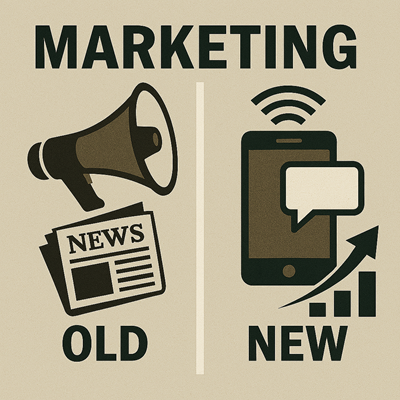
Print advertising is one example of a legacy channel that has retained its place. Newspapers, magazines, and trade publications were primary vehicles for reaching targeted audiences in the 1980s, and they continue to serve similar functions today. Despite the shift toward digital formats, print ads offer a tangible presence and often carry a perception of credibility. A recent article from Business First Online titled Traditional Marketing Tactics That Still Deliver Results in 2025 discusses how print placements in respected publications continue to build brand authority and trust. The full article is available at Business First Online.
Direct mail campaigns also remain in use. In the pre-internet era, businesses sent brochures, catalogues, and promotional letters to households and offices. These materials were designed to inform, persuade, and prompt action. Today, direct mail is often used in conjunction with digital tracking and segmentation, but the core concept remains unchanged. Physical mail still reaches audiences in a personal and tactile way, especially in sectors where digital saturation has led to message fatigue. The continued relevance of direct mail is supported by engagement metrics that show higher response rates compared to some digital formats.
Event marketing and face-to-face networking were central to business promotion in the 1980s and continue to play a role today. Trade shows, conferences, and local events offer opportunities for direct interaction, product demonstrations, and relationship building. These settings allow businesses to present their offerings in a controlled environment and gather feedback in real time. The value of in-person engagement has been reaffirmed in recent years as organisations seek to balance online reach with physical presence. Floodlight New Marketing published an article titled Traditional Marketing Techniques That Work which highlights how face-to-face networking still delivers strong return on investment. That article can be read at Floodlight New Marketing.
Broadcast media such as radio and television also originated before the internet and remain active marketing channels. While digital streaming has changed how content is consumed, traditional broadcast formats still reach large audiences and offer structured ad slots. These channels are often used for brand awareness and regional targeting. The persistence of broadcast advertising reflects its ability to deliver consistent messaging across wide demographics.
The continued use of these pre-internet marketing solutions demonstrates how foundational principles of communication, visibility, and engagement remain relevant. While technology has introduced new tools and platforms, many of the strategies developed decades ago still contribute to how businesses connect with their audiences today.