Past Problems and Present Predicaments in Business Marketing
Small businesses today benefit from marketing tools that solve decades-old problems—here’s how far we’ve come.
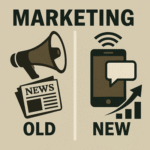
In the 1980s and 1990s, small businesses faced significant marketing hurdles that often limited their reach and growth. From expensive ad placements to limited data on customer behavior, the landscape was fragmented and inefficient. Fast-forward to today, and many of those challenges have been transformed by digital innovation.
One of the biggest issues in the past was lack of measurable data. In the 80s, businesses relied on print, radio, and TV ads without knowing who saw them or how they performed. As noted in CDO Magazine’s retrospective, early digital marketing efforts struggled with data capture and attribution. Today, platforms like Google Analytics and Meta Ads Manager offer real-time insights into audience engagement, allowing small businesses to optimize campaigns with precision.
Another major challenge was limited access to affordable advertising channels. In the 90s, ad space was dominated by large corporations with deep pockets. Small businesses had few options to compete. But the rise of the internet changed everything. As highlighted in Building Brands Marketing’s article, innovations like the World Wide Web and the emergence of e-commerce platforms democratized marketing. Now, even micro-businesses can reach global audiences through social media, email campaigns, and SEO—often for free or at low cost.

As David Ogilvy famously said, “The best ideas come as jokes. Make your thinking as funny as possible.” His quote reminds us that creativity—not just budget—drives effective advertising. Today’s tools empower small businesses to experiment with tone, visuals, and storytelling in ways that were unimaginable decades ago.
Moreover, targeting and personalization have evolved dramatically. In the past, businesses cast wide nets hoping to catch the right customer. Now, AI-driven platforms allow for hyper-targeted messaging based on demographics, interests, and behavior. This shift not only improves ROI but also builds stronger customer relationships.
Finally, the barriers to entry have lowered. You no longer need a marketing degree or agency retainer to launch a campaign. With drag-and-drop email builders, automated social schedulers, and intuitive design tools, small businesses can execute professional-grade marketing in-house.
The journey from analog guesswork to digital precision has been transformative. For small businesses, the key is to embrace these modern tools while staying true to the authentic voice that sets them apart. Marketing may have changed, but the need to connect with customers remains timeless.